

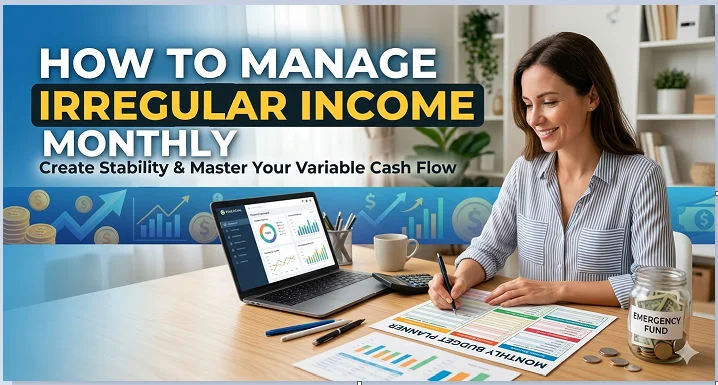
The good news is that learning how to manage irregular income monthly doesn’t require complex financial knowledge. With the right budgeting system and cash flow strategy, you can create stability even when your income fluctuates.
Ever had a month where you felt like a financial rockstar, followed immediately by a month that made you question every life choice? Welcome to the freelance roller coaster. When your income looks like a jagged mountain range rather than a flat highway, traditional money advice completely breaks down.
The secret isn’t earning more; it’s learning how to manage irregular income monthly so your lifestyle never feels the whiplash. Whether you are a digital nomad hopping continents or a freelance graphic designer working from your couch, you can build absolute financial predictability out of unpredictable cash flow.
Quick Answer: How to Manage Irregular Income Monthly
The best way to manage irregular income monthly is to budget using your lowest expected income, build an emergency fund, create a cash reserve, separate tax savings, and use an income smoothing system. These strategies help freelancers and self-employed professionals maintain financial stability even when income fluctuates from month to month.
What Is Irregular Income?
Irregular income is money that varies from month to month rather than arriving as a fixed paycheck. Freelancers, consultants, contractors, gig workers, commission-based professionals, and seasonal workers commonly experience income fluctuations.
Learning how to manage irregular income monthly is essential because expenses stay relatively predictable while income often does not.
Why Managing Irregular Income Is Challenging
Variable income creates several financial obstacles:
- Income changes every month
- Clients may pay late
- Seasonal demand affects earnings
- Taxes are not automatically withheld
- Financial planning becomes more difficult
- Unexpected expenses can disrupt cash flow
Without a clear system, many freelancers overspend during high-income months and struggle during slower periods.
1. Calculate Your Baseline Monthly Expenses
Before creating any budget, determine the minimum amount required to cover your essential monthly expenses.
Include:
- Housing
- Utilities
- Groceries
- Insurance
- Transportation
- Minimum debt payments
This number becomes your financial survival target.
When you know your baseline expenses, every financial decision becomes easier and less stressful.
2. Budget Using Your Lowest Income Month
One of the most effective ways to manage irregular income monthly is to budget conservatively.
Review your income from the past 12 months and identify your lowest earning month.
Build your budget around that figure.
Any income above that amount becomes:
- Savings
- Emergency fund contributions
- Investment capital
- Tax reserves
This strategy prevents lifestyle inflation and creates long-term stability.
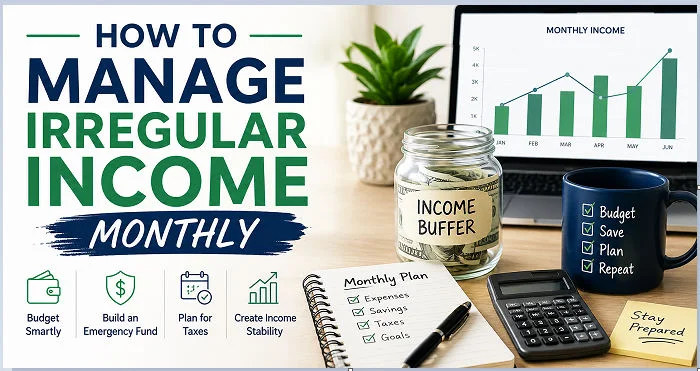
3. Create an Income Buffer
Think of your income buffer as a personal payroll system.
During strong earning months, save excess income in a dedicated reserve account.
During slower months, use that reserve to maintain consistent personal income.
For many freelancers, this simple strategy eliminates most cash flow stress.
For a deeper approach, explore our guide on Freelance Income Smoothing Strategy.
4. Separate Business and Personal Finances
Mixing business and personal money creates confusion and makes budgeting difficult.
Maintain separate accounts for:
- Business income
- Personal spending
- Tax savings
- Emergency reserves
This system improves financial clarity and simplifies tax preparation.
5. Build a Cash Flow Management System
Successful freelancers focus on cash flow, not just income.
Track:
- Expected invoices
- Upcoming expenses
- Client payment schedules
- Outstanding receivables
Creating a reliable Cash Flow System for Freelancers helps you anticipate financial gaps before they become problems.
6. Save for Taxes Automatically
Taxes are one of the most overlooked aspects of freelance financial planning.
Whenever a client payment arrives:
- Deposit the payment.
- Transfer 25%–30% to a tax account.
- Leave tax funds untouched.
This habit helps avoid unexpected tax bills and improves overall financial stability.
Freelancers who use payment platforms should also understand PayPal Taxes for Freelancers to stay compliant and organized.
7. Build an Emergency Fund
An emergency fund is your safety net when income drops unexpectedly.
Recommended targets:
- Minimum: 3 months of expenses
- Ideal: 6 months of expenses
- Advanced: 9–12 months of expenses
Emergency savings protect against:
- Client loss
- Economic downturns
- Illness
- Business slowdowns
8. Use Budgeting Apps to Stay Organized
Technology can simplify budgeting for freelancers.
Many professionals use budgeting apps to:
- Track expenses
- Monitor cash flow
- Manage savings goals
- Forecast future spending
Consider exploring some of the best Free Budgeting Apps for Freelancers to streamline your financial management.
9. Follow the CASH Framework™
A simple framework can make income management easier.
C – Calculate Essential Expenses
Know the minimum amount needed each month.
A – Allocate Tax Savings
Reserve money for taxes immediately.
S – Store Surplus Income
Save extra earnings from strong months.
H – Hold Emergency Reserves
Maintain at least six months of expenses whenever possible.
Following this system creates consistency despite unpredictable income.
Monthly Irregular Income Checklist
Review this checklist every month:
- Review expected income
- Update cash flow forecasts
- Pay essential bills first
- Transfer money to tax savings
- Contribute to emergency funds
- Track unpaid invoices
- Monitor spending limits
- Review financial goals
Frequently Asked Questions
How do you budget when your income changes every month?
Budget using your lowest expected monthly income and save excess earnings during stronger months.
What is the best budgeting method for irregular income?
A conservative budget based on your lowest income month combined with cash flow forecasting is often the most effective approach.
How much should freelancers save in an emergency fund?
Most freelancers should aim for six months of living expenses because income can fluctuate significantly throughout the year.
Can budgeting apps help freelancers manage irregular income?
Yes. Budgeting apps can track expenses, forecast cash flow, and help maintain spending discipline during fluctuating income periods.
How do I save for retirement when my monthly income is highly irregular?
Use percentage-based investing rather than fixed dollar amounts. Set up your financial waterfall to automatically send a fixed percentage of any income above your baseline burn rate into a retirement vehicle like a Roth IRA or Solo 401k. High income months yield massive investments; low months protect your cash.
Key Takeaways
- Budget based on your lowest expected income.
- Build a cash reserve for slow months.
- Separate personal, business, and tax accounts.
- Maintain an emergency fund.
- Track cash flow regularly.
- Save for taxes automatically.
- Use income smoothing strategies to create predictable monthly income.
Conclusion
Learning how to manage irregular income monthly is one of the most important financial skills freelancers can develop.
While fluctuating earnings can feel overwhelming, a structured budgeting system, emergency fund, tax strategy, and cash flow plan can provide stability and confidence.
Start by calculating your baseline expenses, building a small income buffer, and tracking your cash flow consistently. Over time, these habits can transform unpredictable earnings into a sustainable and stress-free financial system.
Ready to Improve Your Financial Stability?
Choose one strategy from this guide today and implement it before your next client payment arrives. Small changes now can lead to significant financial security later.
·